



How to Keep Ants and Cockroaches Out of Your Home This Summer
Every summer, millions of homeowners deal with the same frustrating cycle: ants marching across the kitchen counter, cockroaches appearing in the garage, and a growing sense that no matter what you do, they keep coming back.
According to the National Pest Management Association (NPMA), ants are the number-one nuisance pest in the United States — 100% of pest professionals surveyed treated ant infestations in the past year, and over half report infestations are on the rise. Infestations peak between June and August when heat and humidity drive ants indoors looking for food and water. Cockroaches follow a similar seasonal pattern, thriving in warm, moist environments like garages, basements, and bathrooms.
The good news is that most summer ant and cockroach problems are preventable. Understanding why they show up, where they enter, and what keeps them coming back gives you a practical plan to keep your home pest-free … without turning your kitchen into a chemical zone.
Key Takeaways
· Ants are the #1 nuisance pest in the U.S., with infestations peaking in summer when heat and humidity drive scouts indoors (NPMA).
· Most summer ant and cockroach problems are preventable by sealing entry points, removing food and water sources, and using deterrents proactively.
· Plant-based essential oils (lemongrass, peppermint ,thyme) are studied for their ability to repel ants and deter cockroach activity, and pouch-format products are designed for use in homes with children and pets when label directions are followed.
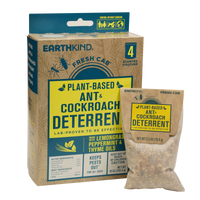
· Deterrents like EarthKind's Fresh Cab Ant & Cockroach Pouches create a scent barrier pests avoid, working as a preventive layer rather than a reactive chemical treatment.
· Call a pest professional if you see daytime cockroach activity, identify carpenter ants, or see no improvement after 2–3 weeks of consistent prevention.
Content
• Why Ants and Cockroaches Invade in Summer
• Where They Get In: Common Entry Points
• Prevention First: How to Make Your Home Less Inviting
• Choosing the Right Approach: Sprays, Baits, Traps, and Deterrents
• The Botanical Option: Plant-Based Pest Deterrents
• Room-by-Room Summer Pest Prevention Checklist
• When to Call a Professional
Why Ants and Cockroaches Invade in Summer
Ants and cockroaches are not random visitors. They follow predictable patterns driven by temperature, moisture, and food availability.
Ants operate in colonies that can number in the hundreds of thousands. When outdoor temperatures rise, scout ants search for reliable food and water sources, and your kitchen is the closest thing to a guaranteed supply. Once a scout finds something, it leaves a chemical trail back to the colony, and the rest follow. That trail is why you see a line of ants along the same path day after day, even after you wipe them down.
Cockroaches are drawn to warm, humid environments with easy access to food scraps and water. Garages, basements, under-sink cabinets, and areas around plumbing fixtures are prime territory. They are nocturnal, so by the time you see one during the day, the population is usually well established.
The key insight: Both pests are following environmental signals, not targeting your house specifically. Change the signals, and you change the outcome.
Where They Get In: Common Entry Points
Before you treat a pest problem, it helps to understand how they are getting inside. Common entry points include:
• Gaps around doors and windows: Even small gaps under exterior doors or around window frames are highways for ants. A gap of 1/16 of an inch is enough.
• Cracks in the foundation: Hairline cracks in basement walls or where the foundation meets the siding are common entry points for both ants and cockroaches.
• Utility penetrations: Openings around pipes, wires, and cables where they enter the house are often unsealed or poorly caulked.
• Garage doors: The seal at the bottom of a garage door wears over time, creating gaps that ground-level pests exploit easily.
• Ventilation gaps: Dryer vents, bathroom exhaust vents, and attic soffit vents without proper screening allow pests to enter through the walls.
A quick walk around the exterior of your home with a tube of caulk and some weatherstripping can close many of these pathways before pests find them. This is one of the highest-impact prevention steps you can take, and it costs almost nothing.
Prevention First: How to Make Your Home Less Inviting
The most effective pest strategy is making your home unappealing to ants and cockroaches before they arrive. Think of it as removing the invitation rather than dealing with uninvited guests after the fact. This prevention-first approach is the foundation of Integrated Pest Management (IPM), the framework recommended by the U.S. Environmental Protection Agency: remove the food, water, and shelter pests need before reaching for chemical treatments.
Definition — Integrated Pest Management (IPM): A science-based pest control framework, recommended by the EPA, that prioritizes prevention (sealing entry points, removing food and water sources) and uses chemical treatments only when needed. Plant-based deterrents fit naturally into an IPM approach.
In the kitchen:
• Wipe down counters and stovetops after every meal — even small crumbs attract scouts.
• Store food in sealed containers, especially sugar, flour, cereal, and pet food.
• Empty the trash regularly and use a can with a tight-fitting lid.
• Fix dripping faucets — ants seek water as aggressively as they seek food.
• Clean under appliances periodically. Crumbs and grease buildup behind the stove or under the refrigerator are prime attractants.
In the garage and basement:
• Reduce moisture with a dehumidifier if humidity consistently runs above 60%.
• Store firewood, cardboard boxes, and recyclables away from exterior walls.
• Sweep regularly — garage floors accumulate food residue from groceries, pet supplies, and outdoor gear.
• Check the garage door seal and replace it if it is cracked or compressed.
Around the exterior:
• Trim bushes and tree branches that touch the house — these act as bridges for ants.
• Move mulch at least 12 inches away from the foundation. Mulch holds moisture and attracts pests.
• Clean gutters to prevent standing water near the roofline.
• Store outdoor trash cans away from entry doors.
These steps reduce the food, water, and shelter signals that draw ants and cockroaches to your home. Many homeowners find that consistent prevention alone keeps summer pest problems manageable without additional treatments.
Choosing the Right Approach: Sprays, Baits, Traps, and Deterrents
When prevention alone is not enough, there are several treatment approaches to consider. Each works differently, and the best choice depends on the severity of the problem and your household’s priorities.
Quick comparison:
|
Approach |
How It Works |
Best For |
Safety Profile |
|
Sprays |
Kill pests on contact; leave a chemical residual barrier |
Active, visible infestations |
Keep children and pets away from treated surfaces until dry |
|
Baits |
Slow-acting poison carried back to the colony |
Addressing the colony, not just visible pests |
Place out of reach of children and pets |
|
Traps |
Capture or kill individual pests (glue traps, bait stations) |
Monitoring and reducing visible activity |
Generally safe but not pet-friendly if accessible |
|
Plant-Based Deterrents |
Botanical essential oils create a scent barrier pests avoid |
Prevention and ongoing protection in family spaces |
Designed for use in homes with children and pets when label directions are followed |
• Sprays kill pests on contact and leave a residual barrier. They are effective for active infestations but involve chemical residue on treated surfaces. Most require keeping children and pets away from treated areas until dry.
• Baits attract pests with a food source laced with a slow-acting poison. The pest carries it back to the colony, which can reduce the population over time. Baits take longer to work but can address the source, not just the visible pests.
• Traps capture or kill individual pests. Glue traps and bait stations are common for cockroaches. They work well for monitoring and reducing visible activity but do not address the colony.
• Deterrents take a different approach entirely. Rather than killing pests after they arrive, deterrents make treated areas unappealing so pests avoid them in the first place. Botanical deterrents use plant-based essential oils — scents that are pleasant to people but that ants and cockroaches tend to avoid — to create a scent barrier in treated areas.
There is no single “best” approach for every situation. Many homeowners use a combination of sealing entry points, maintaining clean habits, and placing deterrents in key areas as a preventive layer, then adding targeted treatments if an active infestation develops.
The Botanical Option: Plant-Based Pest Deterrents
Definition — Botanical Deterrent: A pest control product that uses concentrated plant-based essential oils (such as peppermint, lemongrass, or thyme) to create a scent barrier pests avoid. Unlike chemical sprays, deterrents prevent pests from entering rather than killing them after they arrive.
One approach that has gained traction with homeowners who want effective pest prevention without chemical sprays is plant-based deterrence. The concept is simple: certain botanical essential oils produce scents that ants and cockroaches naturally avoid.
Peppermint, lemongrass, and thyme are among the most effective botanical oils for deterring ants and cockroaches. Research has shown that these oils disrupt the scent trails ants rely on to navigate and forage, and create an environment cockroaches find inhospitable. Peer-reviewed research published in the Journal of Vector Ecology has documented that essential oils from plants in the citrus family demonstrate strong repellent activity against multiple cockroach species in laboratory conditions, and that research on Blattella germanica (German cockroach) has documented that thyme and related botanical oils disrupt cockroach behavior and habitat preference. Peppermint oil's active compound, menthol, has been shown to disrupt ant pheromone trails — the chemical signals ants leave to guide nestmates to food sources.
How botanical deterrents work in practice: Products like Fresh Cab Ant & Cockroach Deterrent use concentrated essential oil blends in a breathable pouch. You place the pouch in the area where you are seeing pest activity: under the kitchen sink, along baseboards, in the pantry, in the garage — and the scent creates a zone that ants and cockroaches avoid. Each pouch is formulated for extended scent release — replace it when the scent fades.
What makes this approach different:
• No spray, no residue, no chemical smell in your kitchen or living spaces.
• Designed for use in homes with people and pets — no spray, no surface residue, and no "keep children and pets away until dry" waiting period required by chemical sprays.
• Works as a preventive layer, not just a reactive treatment. Place them before you see pests, and they help keep pests from establishing in the first place.
• Complements other methods. You can use botanical deterrents alongside sealing, cleaning, and targeted treatments for a multi-layered approach.
Botanical deterrents are not designed to eliminate an existing heavy infestation — for that, you may need baits, traps, or professional help. But for everyday summer prevention in the kitchen, garage, pantry, and storage areas, they offer an option many families prefer.
A note on cats: undiluted peppermint essential oil applied directly can be toxic to cats, so DIY essential oil sprays should be used with caution in cat households. Sealed pouch-format products avoid this exposure risk because the oils are contained.
Room-by-Room Summer Pest Prevention Checklist
Use this checklist to pest-proof your home before summer activity peaks.
Kitchen
· Seal gaps around the window above the sink
· Store all open food in airtight containers
· Fix any dripping faucets
· Clean behind the stove and refrigerator
· Place a deterrent under the sink and near entry points
· Take trash out nightly during summer months
Garage
· Inspect and replace the garage door bottom seal if worn
· Sweep floors and remove food residue
· Reduce clutter, especially cardboard and paper storage
· Place a deterrent near the garage entry door and along the back wall
· Run a dehumidifier if moisture is a problem
Bathroom
· Fix any leaking faucets or running toilets
· Seal gaps around plumbing under the sink
· Improve ventilation with an exhaust fan
Basement
· Seal foundation cracks with hydraulic cement or caulk
· Reduce humidity below 60%
· Move stored items off the floor and away from walls
· Place a deterrent near basement windows and utility entry points
Exterior
· Caulk gaps around windows, doors, and utility penetrations
· Trim vegetation away from the house
· Pull mulch back from the foundation
· Clean gutters and downspouts
· Move trash cans away from entry doors
When to Call a Professional
Most summer ant and cockroach issues are manageable with consistent prevention and the right products. However, there are situations where professional pest management is the right call:
• You are seeing large numbers of cockroaches during the day. Daytime cockroach activity usually indicates a large, established population that household products alone may not resolve.
• Carpenter ants are present. Unlike common household ants, carpenter ants can damage wood structures. If you see large black ants (typically 1/4 to 1/2 inch) near wood framing, decks, or window sills, get a professional assessment.
• DIY methods have not reduced the problem after two to three weeks. If you have sealed entry points, cleaned consistently, and used deterrents or baits without improvement, a professional can identify the species, locate the source, and apply targeted treatments.
• You suspect a colony inside the walls or structure. Rustling sounds, frass (insect debris), or persistent activity from a specific area may indicate nesting within the home.
Definition — Carpenter Ant: A large (1/4 to 1/2 inch), typically black ant species that excavates wood to build nests. Carpenter ants don't eat wood (unlike termites) but can compromise structural integrity over time if left untreated.
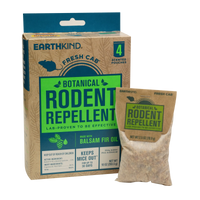
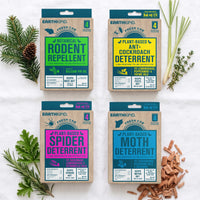
EarthKind offers a full line of plant-based pest prevention products — including Fresh Cab Ant & Cockroach Deterrent pouches and Fresh Cab Rodent Repellent — designed to keep your home pest-free without harsh chemicals. Shop the full lineup at earthkind.com, or find EarthKind products at your local Menards, Do it Best, Ace Hardware, Tractor Supply, or on Amazon. For problems that go beyond what household products can handle, a licensed pest management professional is the next step.
FAQ
What is the best way to keep ants out of my kitchen in summer? Start with prevention: seal entry points, eliminate food and water sources, and wipe down surfaces after meals. For ongoing protection, place a botanical deterrent under the sink and near common entry points. If you have an active infestation, baits can help reduce the colony over time.
Do natural or plant-based pest deterrents actually work? Yes. Botanical essential oils like peppermint, lemongrass, and thyme have been shown to deter ants and cockroaches. Products using concentrated oil blends in pouch form, such as Fresh Cab Ant & Cockroach Deterrent, are designed to provide a botanical scent barrier in treated areas and are formulated for extended release. They work best as a preventive layer rather than a treatment for severe infestations.
Are botanical pest deterrents safe around kids and pets? Pouch-format plant-based deterrents are designed for use in homes with children and pets when label directions are followed. Unlike chemical sprays, they do not leave residue on surfaces and do not require a waiting period before the area can be used normally. As with any pest product, always read and follow the product label.
When should I use a spray versus a deterrent? Sprays are best for active infestations where you need to knock down a visible pest population quickly. Deterrents are best for prevention — keeping pests from establishing in an area in the first place. Many homeowners use both: deterrents as the first line of defense, and targeted sprays or baits only when needed.
What attracts cockroaches to my garage? Cockroaches seek warm, humid environments with access to food and water. Garages often provide all three: warmth from cars and equipment, moisture from concrete floors and poor ventilation, and food residue from stored pet food, garbage, and spills. Reducing humidity, sealing entry points, and keeping the space clean are the most effective steps.
How do I know if I need a professional exterminator? If you are seeing cockroaches during the day, have identified carpenter ants, or have not seen improvement after two to three weeks of consistent prevention and treatment, it is time to call a professional. EarthKind's customer care team can help you choose the right plant-based deterrent for your situation, but if signs point to a heavy or structural infestation, a licensed pest management professional is the right next step.
What is the best natural ant repellent? Peppermint, lemongrass, and thyme essential oils are the most researched plant-based ant repellents. Peppermint oil works by disrupting the pheromone trails ants use to navigate. For longer-lasting protection without mixing your own sprays, pouch-format products like EarthKind's Fresh Cab Ant & Cockroach Deterrent use a concentrated essential oil blend formulated for extended scent release; replace each pouch when the scent fades.
How do I get rid of roaches without chemicals? Start by eliminating what attracts them: fix moisture leaks, seal cracks where they enter, store food in airtight containers, and clean up nightly food residue — especially in the garage and under appliances. Then add a plant-based deterrent in problem areas to keep them from coming back. Published research has shown several essential oils (including thyme, oregano, and citrus) demonstrate repellent activity against common cockroach species.
Are essential oil pest deterrents safe for pets and children? Pouch-format botanical deterrents are designed for use in homes with children and pets when label directions are followed. There's no spray, no surface residue, and no "keep away until dry" waiting period required by chemical sprays. Note: undiluted peppermint essential oil applied directly can be toxic to cats, so DIY sprays should be used with caution in cat households. Sealed pouch products avoid this risk because the oils are contained.
Do botanical pest deterrents really work, or is it marketing? They work — but they work as deterrents, not exterminators. Peer-reviewed research has documented that several essential oils demonstrate repellent activity against common cockroach species in laboratory conditions, and field reports support their use for deterring ant activity. The key is using them preventively (before infestation establishes) and consistently (replacing pouches when scent fades). For an active heavy infestation, you'll likely need baits or professional treatment in combination.
Ready to make your home less inviting to ants and cockroaches this summer? Shop EarthKind's full line of plant-based pest deterrents at earthkind.com — including Fresh Cab Ant & Cockroach Pouches, Stay Away deterrents, and Fresh Cab Rodent Repellent. Plant-based, made in the USA, and backed by EarthKind's product guarantee. Also available at Do it Best, Ace Hardware, Tractor Supply, and Amazon.


