



Pantry Moths in Dog, Cat, or Other Pet Food: What Should You Do?
Discovering moths in your pet’s food can be unsettling, but it’s a more common issue than you might think. These pantry pests often find their way into dry pet food before it even reaches your home. Understanding why moths are attracted to pet food and how to remove them is key to keeping your furry friend’s meals safe and pest-free.
Let’s go over why moths are attracted to pet food, what to do if you find them in your pet’s food, and how to keep them out for good.
Why Are There Moths in My Pet Food and What Attracts Them?
The moths you find in dry pet food, such as dog kibble, cat food, or birdseed, are usually Indian meal moths. These pantry pests are attracted to dry food sources where their eggs can be easily hidden and have access to food once they hatch. Unfortunately, moths often infest pet food before it even enters your home—typically during processing, storage in warehouses, or transport. They can also be found in other dry goods like rice, grains, beans, dried fruit, or even cake mixes.
A box or bag of dog food may already contain moth eggs when you purchase it, and the earliest stages of a moth infestation are easy to miss. Moth eggs are incredibly small, only 1 to 2 hundredths of an inch. They are nearly impossible to detect with the naked eye. Once they hatch, the larvae (their feeding stage) grow up to ½ an inch long and look like tiny white worms or maggots with brown heads.
Most of us don’t inspect pet food products closely, so the first visible sign is usually an adult moth flying around. By this life cycle stage, the infestation is already well underway. A single female adult moth can lay up to 400 eggs in just two weeks, making early detection and prevention crucial. Their ability to multiply quickly, and their preference for dry, undisturbed food, makes pet food a prime target.
Are Moths Harmful to Dogs, Cats, or Other Pets?
There’s no need for pet owners to panic if their pets eat food containing moths at any stage of their development. The good news is that pantry moths are not known to carry any diseases that will harm you or your pet.
Although they are not a significant health risk, these flying bugs are still unsightly and could contaminate other food in the home. If the thought of serving your furry friend infested food sends shivers down your spine, take the time to check for a moth presence when purchasing new food.
First, sift through the top four inches of the food and carefully inspect it. Pantry moths rarely go any deeper than this. Look for tiny white eggs, worm-like insects, casings, and white webbing, similar to a spider web. The webbing forms when the cocoon is spun. After hatching, you will notice the empty moth casings.
What to Do About Moths in Dog Food
If there are clear signs that moths have been inhabiting your dog or cat food (or any other family pet’s food), the food should be sealed up, thrown away, and a new bag should be purchased. Sealing up the package before disposal will help ensure that other food items throughout the home will not be contaminated as well.
If there are other foods, pet or human, nearby or in contact with the moth-infested food, be sure to check them thoroughly. This is because the adult female moths continually sniff out the perfect place to lay their 400+ eggs. If you see similar signs in other foods, unfortunately, it’s best to throw out those items as well. If they show no signs of any critters, we recommend freezing the food for a week to kill any remaining eggs, just to be safe.
Keeping Pantry Moths Out of Pet Food for Good
Once you bring pet food home and inspect it, take steps to prevent moths and other pantry pests from infesting it during storage. Follow these tips to help:
Proper Storage
- Dump the entire pet food bag into an airtight glass or plastic container after thoroughly inspecting it. Any nearby moths won’t be able to sniff out or access the food and will move along.
- Keep any other dry food in the area in a sealed container or stored in the freezer if it’s freezer-friendly.
- Promptly recycle or remove any boxes or food packaging since moth eggs may be hidden under the seams or inside the corrugation of cardboard boxes.
Cleaning & Prevention
- Clean up your food storage area where traces of pet food may be present. Vacuum and wipe away any crumbs in the surrounding area to eliminate attractants that may lure moths into the space.
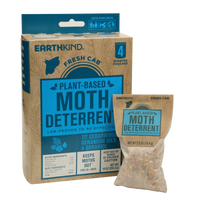
- Place a pouch or two of EarthKind® Stay Away® Moths wherever pet food is stored for effective prevention. These pouches use a blend of essential oils that smell offensive to moths but pleasant to humans, obscuring the food aromas and odors that attract them. Learn the differences between repellents, pantry moth traps, and mothballs.
Avoiding Chemicals
- Pesticides are unnecessary when protecting your loved ones and fur babies. Instead, use botanical solutions like Stay Away® Moths to keep pantry moths out without exposing pets to harmful chemicals.
Stay Moth-Free with EarthKind’s Botanical, Pet-Friendly Solution
If you ever come across pantry moths in your pet’s food, act quickly to prevent a full-blown infestation. Find the source, remove the contaminated food, and inspect the surrounding area thoroughly. Be sure to clean every crevice and corner where moths or their eggs could be hiding.
While these common pests don’t pose a direct health risk to your pets, they are certainly an unwelcome nuisance. By properly storing food in airtight containers, maintaining a clean space, and using EarthKind® Stay Away Moth deterrent, you can keep infestations at bay and protect your pet’s food supply. A little vigilance goes a long way in ensuring that your home—and your pet’s meals—remain moth-free.


